How to Help a Parent Practice Hearing
You can see how much your parent or partner misses in conversations, and you want to help. But pushing them to practice usually backfires. Here is how to support them in a way that feels like help, not pressure.
When you keep bringing up their hearing, it can feel like a spotlight on something they already feel self-conscious about. Even kind reminders can land as criticism.
People stick with a habit when it feels like their choice. The more it feels handed down, the more they dig in. So the first move is to step back from fixing and toward helping.
Practice sticks when it connects to something the person actually wants. Not "you should hear better" but the moment they are missing.
Ask what they wish were easier. Maybe it is hearing the grandkids on a video call, or following the group at Sunday dinner. That is the thing worth practicing for.
Every bit of friction is a reason to skip it. Your job is to make it simple to start, not to hover over it.
Set the app up on their phone or tablet for them
Pick a short first session, a few minutes, not a marathon
Tie it to something they already do, like morning coffee
Let them do it on their own, without an audience
You do not have to hover, but company can help at the start. Doing a session side by side takes the pressure off and makes it feel less like a chore.
You can be part of the practice in real life too. Read a short passage aloud while they listen without watching your lips. Keep it light and low-stakes.
Notice the wins that matter to them, not the ones you were tracking, like a conversation that felt easier or a word they caught that they used to miss.
Skip the scorekeeping. If they miss a few days, let it go. A calm "want to do a quick one?" beats a guilt trip every time.
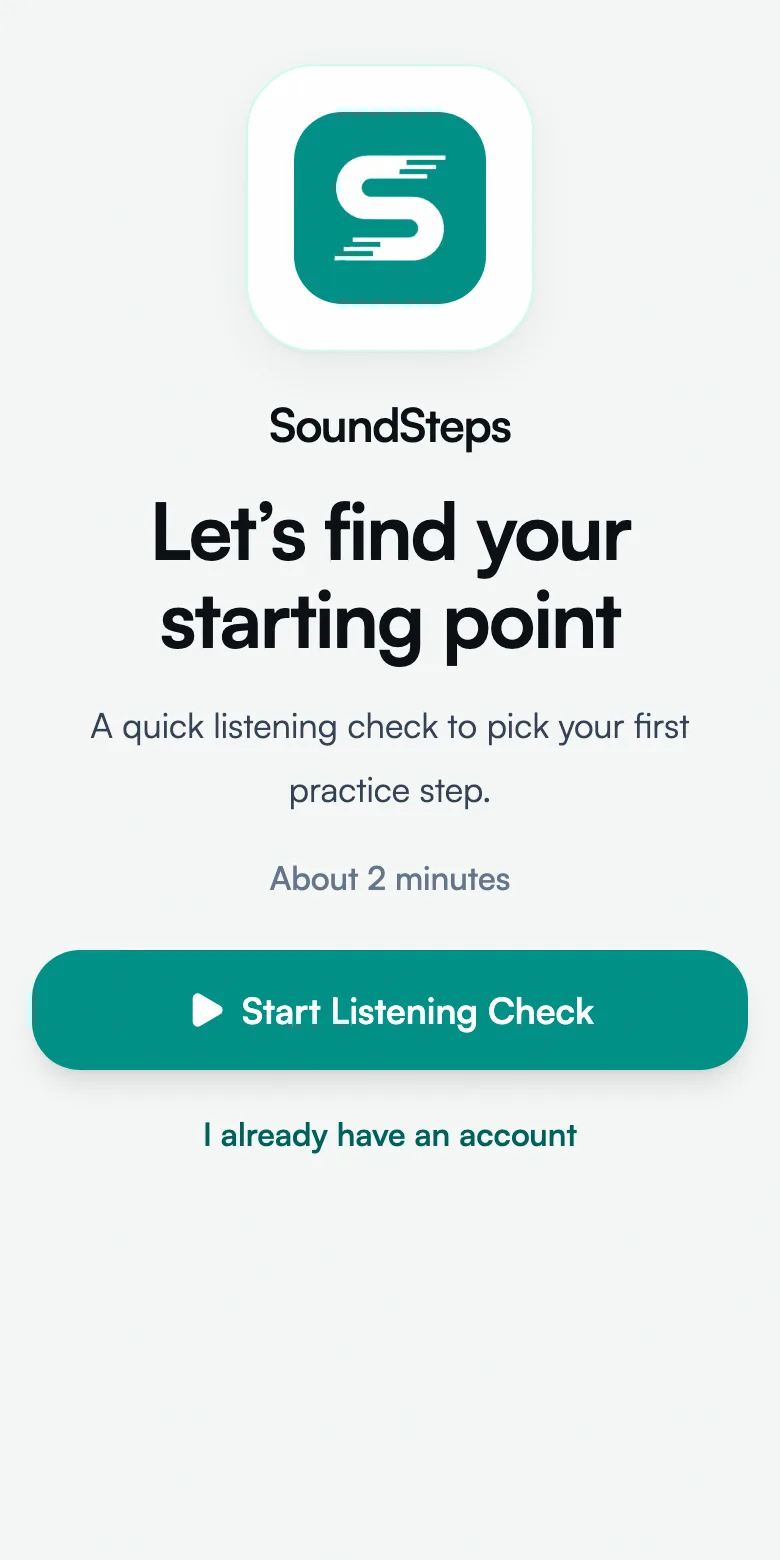
SoundSteps starts with a short listening check, then guides short sessions that build up gently. There is no clinic visit to book and no long setup to wade through.
That makes it easy to hand someone and step back. They practice at their own pace, and you get to be encouraging instead of reminding.
FAQ
Tie it to something they care about, like hearing the grandkids, and make it easy to start. Set the app up for them, keep the first session short, and let it be their choice rather than your reminder.
Lead with the moments they are missing, not the device. Ask what they wish were easier, then help with that. People stick with a habit far longer when it feels like their own idea.
Both can work. Company at the start takes the pressure off, and doing a session side by side helps. Once they have the hang of it, let them practice on their own, without an audience.
Let a missed day go without comment. A calm invitation to do a quick session works better than reminders, which can feel like criticism and push people away.
Look for one with short sessions and a simple start. SoundSteps begins with a quick listening check and no clinic sign-up, so you can set it up once and let them go at their own pace.
Related reading
First-week practice that fits into a normal day.
Build a listening habit without turning it into a draining task.
Keep listening practice short enough to repeat and trust.
Simple ways to start structured listening practice without a clinic visit.
Why groups are the hardest, seating and social tactics, and a practice angle.
SoundSteps
Set up the free listening check together, then let short guided sessions do the rest. No clinic visit, no pressure.
SoundSteps is designed for hearing training and practice. It is not intended to diagnose, treat, cure, or prevent any medical condition. Consult a healthcare professional for medical advice.